Showing posts with label traditional. Show all posts

Saturday, 17 October 2020

Cellers- Traditional Mallorcan Taverns

As mentioned previously the production of wine in Mallorca was affected more greatly than mainline Spain by the vine pest. Which led to other crops been grown on the vines. The wine cellars were left standing unused, now as resourceful as ever the Mallorca’s came up with an alternative use. The wine cellars were converted into semi-underground restaurants. These are very distinctive of Mallorca, I’m not sure if anyone else has these? The food served is traditional and you should not expect fine dining as its good rustic fare. Real basement cellers have wine vats to prove it even if nowadays the term is used for any old-style restaurant. The best cellers are usually found in rural market towns like Inca and Sineu. These are great places to try Mallorcan classics like llom amb col (pork wrapped in cabbage) or frit mallorqui (fried offal). You can combine a trip to the weekly market with a visit to a cellar for an authentic day out.

Traditionally a celler had been a place where the wine was made and aged. These places were later transformed into restaurants specialising in Majorcan dishes, first aimed at the local residents, and later to tourists. I will give you a brief history of how cellers came about in Mallorca.

Before cars and vans became the norm, goods were transported around the island by mule-drawn carriages. This made a cross-island journey a slow affair. Its also fair to say that the men who were transporting goods were never in a hurry to get from A to B. So, a journey from one side of the island to the other could easily take a couple of days, meaning many people wanted to sleep overnight.

Along the old main road from Puerto Andratx to Puerto Alcudia there were roadside taverns called hostals that put up people and mules for the night. Now although these were at strategic points on the route, the main stop-off point and the favourite resting place for most people was Inca. As the geographical centre of the island it was the ideal stop on such a long journey. And Inca was well prepared to handle travellers. As it is also in the heart of one of the island’s main wine-producing areas, Inca was a major supplier of wines from the barrel.

The authentic cellars were below ground level so were cooler than premises at ground level. The better ones had several wines in barrels and people who lived nearby, as well as those who came from far away, took along wicker-covered flagons that were filled direct from the barrels. However, travellers going either east or west across the island, often wanted something to eat. That was easy enough because the celler owner’s wife always had country bread at hand and it was easy to serve a few slices with sobrasada or other kinds of local charcuterie. Travellers were soon interested in eating something more substantial. So, she began to make larger amounts of what the family were eating for lunch or dinner and she served that as the dish of the day. All housewives were good cooks in those days, some were better than others and many of the cellers started to serve two dishes instead of just one and even offer desserts.

Long before visitors from every corner of the island were pulled towards Inca, Sineu, Petra, Palma or Algaida. Inca was already famous with the locals as a haven for good Majorcan cooking. I can testify to this myself as this town has a large range of very good, affordable eating places.

Cellers were started as large and convenient places where people bought and drank wine. But, soon the wine-dispensing cellers became the restaurants they are today. The food served was only Majorcan cooking. Usually from a family- recipes and although the dishes were the familiar local kind, each family had variations that made their versions different. Some of the cellers have been in the hands of the same family group for decades producing a strong connection with the past. That’s why you will find an unbroken line of tradition in the cellers and other village restaurants that have been in the same family for generations. And it is this dedication to cooking as it was done more than 100 years ago that keeps people going back to them.

The most famous is the Celler Sa Premsa Restaurant, a true Mallorcan treasure located within the island’s capital city of Palma. You dine in a rustic restaurant surrounded by wooden barrels and local flair. The menu comprises of genuine traditional local cuisine, giving its visitors a little snippet of the island's culinary secrets. It has been famous since the 1960s.

Celler Can Amer in Inca, is located in a building which is classed as historic heritage. The food is delicious including roast sucking pig. Also, in Inca, is the Celler can Ripoll, famous for its cuisine since the 1940s, which has a pretty garden terrace. The building dates back to 1768, so ideal for history lovers as well as foodies.

When in Mallorca, you should definitely try some typical local food. There are various restaurants to be explored around the island and they will be full of Mallorcan patrons as well as been popular with tourists. These, are such a different experience and the cooler temperature is idea for eating on very hot days. I’m sure you will enjoy it very much!


Sunday, 16 August 2020

Santa Semana- Easter

I mentioned in my last blog about Semana Santa, this is a religious festival and one of Spain’s most traditional festivals.In the UK, for most people, Easter is about giving and eating chocolate eggs. However, in Spain, religious traditions are still prominent. Especially in the case of Semana Santa, which means Holy Week.

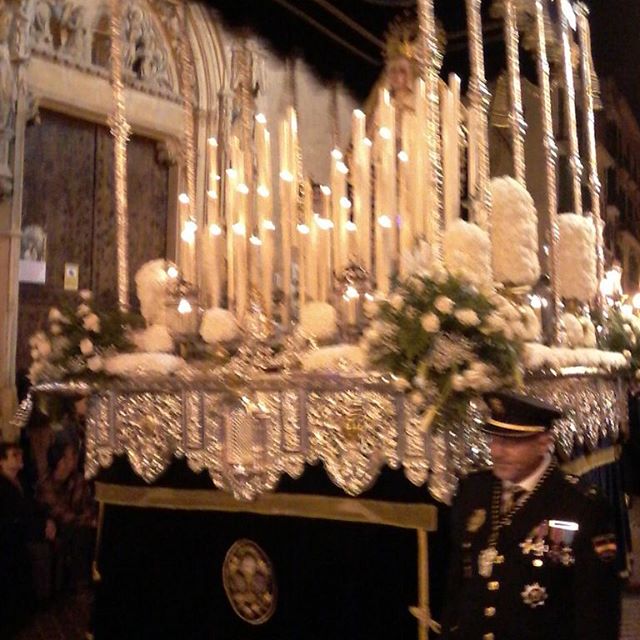
The celebration is a week long and takes place all over Spain during Easter. Thousands of people take part in the processions and even more line the streets to watch. Huge floats carrying religious statures are brought to the churches. there are often marching bands following.  Although its a sombre occasion to pay homage to the last days of Jesus, its also colourful and captivating.


Each float depicts a scene from the Easter story and are carried by Costaleros. They are followed by Nazarenos who carry candles, torches or wooden crosses. They are dressed in full-length robes and conical hoods which cover their faces, some will be bare-footed. Its quite haunting and a bit sinister.This Spanish tradition originates from medieval times, when hoods and robes would be worn by people to show their repentance over past sins. At the back of the procession are women in mourning dressed in black lace veils called mantillas, often quite mature ladies.


All ages take part from young children to their grandparents, in villages everyone in the family takes part. I was amazed that even teenagers dress up! I have seen several processions both in small villages and Palma which is a major city. Both of these were wonderful an a sight to behold. The only word of warning is that the festivities continue for hours and its unbelievable busy, so dress comfortably and take something to eat and drink as the cafes are packed. But I would not have missed it for all the world. 


Saturday, 15 August 2020

Fiesta- A Good Reason To Have A Party


The one thing that I remember most from my travels were the sheer amount of Fiesta’s everything from parties in a private house to street parties to fiestas or fetes involving the town or city. Although religious events are often celebrated the biggest been Semana Santa at Easter, overall, any excuse seems to be a good reason to hold a party for the fun-loving Spanish.

Fiesta or Fete translates to a party, holiday or feast and usually its a mix of all three. The verb is festejar which is to celebrate, and this certainly the case from what I has seen.

In Barcelona in August, the neighbourhood of Gràcia explodes into celebration. The Festa Major de Garcia lasts a week, in the day and evening. Taking part in over 20 streets in Gràcia. Although drinking, dancing and partying dominate the evening, the festival also features cultural activities and a fire run (correc) as well as activities for children during the day.

I feel that certainly the street events brought the communities together much more than in the UK. Both young and old taking part. Although the recent pandemic has affected this and people in Britain are now more community- spirited than previously. I spent several months working in a rural location in Andalusia and the nearest small village held fiestas regularly with everyone in the village attending. Every village, no matter how small, has its own, unique celebrations.

Whilst thousands of festivals are celebrated all over Spain throughout the year there are only a few that bring overseas visitors specifically for the event. In mid- March the Falles Festival takes place. It’s a traditional celebration held in commemoration of Saint Joseph in the city of Valencia, Spain. The term Falles refers to both the celebration and the monuments burnt during the celebration. It has been declared an event of Cultural Heritage of Humanity by UNESCO. The whole of the city becomes an enormous street party, with parades, paella competitions and bullfights. Each night there is a firework display culminating in La Nit de Foc on the 18th March. The following night la Cremà takes place when all the ‘ninots’ which have been stuffed full with fireworks are burnt.

The official focus for the festival is San José, the patron saint of carpenters. Starting in the Middle Ages, carpenters hung planks of wood called ‘parots’ in the winter to support their candles whilst working. In spring these pieces of wood were burned as a way of celebrating the end of winter. After a while they began to put clothing on the ‘parot.’ These became the forerunners of the contemporary ‘ninots’ the enormous papier-mâché figures of today. It’s a loud, busy, colourful festival, not for the faint-hearted but a wonderful experience.

Medieval history is celebrated in many of the festivals in Spain. The annual Medieval fair in Capdepera, in Majorca, is set in the streets leading up to the Medieval castle that overlooks the town and is a popular event for adults and children alike. Blacksmiths, silversmiths, carpenters, shoemakers and ceramists are among the long list of artisans who offer Medieval inspired products to sell. Expect to see jousting, jugglers, falconry displays, stilt-walkers and fire-eaters. Traditional food and drink stalls are scattered throughout the event selling all kinds of Medieval fair. It wouldn’t be a Spanish fair without an excessive amount of food! The finale is a walk up to the castle by candlelight, which was atmospheric and an unforgettable memory.

 A similar festival takes place in Ibiza. To celebrate the declaration of Ibiza's Dalt Vila as a UNESCO World Heritage Site in 1999, every May the old- town hosts vibrant celebrations including three days of street parties, musical performances, artists and medieval re-enactments. As an added bonus, entry to all galleries and museums in Dalt Vila is free during the festival.

If you are planning a holiday do look in the local guides and see what is going on as not only is this great, often free entertainment it’s a wonderful way to see the culture and understand the history of the area.Many festivals have been cancelled for 2020 but I am sure they will be back with a great big bang in 2021.


Thursday, 2 July 2020

Horchata- Spanish Local Drink


Whilst I was staying in Valencia, I came across a local drink, it was really hot during my stay and I walked a lot, so finding this chilled, milk-like drink was perfect. At first, I thought it was almond milk, but it has a slightly different and distinctive taste. This was my first, and certainly not my last Horchata!

While Horchata de Chufa was popularized in Spain, it originated in North Africa as far back as 2400 B.C. The Moors brought it to Spain during the Muslim conquest. In Valencia it was given the name of Horchata, before that it was known as Kuunu aya.

Horchata or Orxata (in Valencian) Is a drink made from soaked, ground, and sweetened Tiger nuts it is similar in taste and appearance to various kinds of plant milk beverages. It originated at least as far back as 13th-century Valencia, where it is known as Horchata de Chufa. It is regaining popularity outside of Spain because of its numerous health benefits.  In a recent study it was shown to have high levels of resistant starches it’s also gluten and nut- free. This is a healthy milk substitute ideal for those who are dairy and lactose intolerant or vegan, it can also be used in tea, coffee, cooking, smoothies and anywhere else you would use milk. 

There are other delicious Horchata recipes in Latin America, but they’re made with other nuts and even with rice and some are not vegan. In the USA, Horchata, was the most popular drink of 2019. The coffee giant Starbucks have made a blended drink called the Horchata Frappuccino, made with almond milk, cinnamon dolce syrup and ice topped with whipped cream, caramel, cinnamon and sugar sprinkles. Clearly not as healthy as the original version or vegan!

While they are called Tiger nuts, they aren’t nuts at all, but are actually the tubers of a type of grass-like plants. With a flavour reminiscent of both coconut and almond, they earn their name from a tiger-striped exterior. They can be eaten freshly dug out of the ground, or roasted, boiled, or juiced. One of the hottest superfoods on the market, Tiger nuts are naturally sweet and are prebiotic which means they help your body to be able to more easily grow helpful probiotic bacteria also they are high in antioxidants, vitamins C and E and minerals such as iron, potassium, and magnesium. Tiger nuts were a vital component of our ancestors diet, the tiny tubers are high in fibre and low in calories and fat. So, as well as making a very tasty drink particularly chilled with ice on hot days, Tiger nuts have numerous health benefits so it’s really good for you too!

The traditional recipes are made with a lot of refined white sugar. So, I have found a healthy but delicious version for you to try instead. I have seen recipes that add other flavours, but personally I prefer the plain version. You can buy plain raw Tiger nuts from most Whole Foods and online retailers.

Horchata- Ingredients:
200g organic tiger nuts, 500ml filtered water, a cinnamon stick, lemon peel, any natural sweetener of your choice like 1 tsp honey or 4 Medjool Dates, optional grated cinnamon.

To make
Soak the Tiger nuts in water for at least 4-6 hours or overnight. Drain the Tiger nuts and blend them with 2 cups of water. (500 ml) Place the mixture in a glass jar, add a cinnamon stick and the peel of a lemon. Let the mixture stand in the fridge for at least 2 hours. Strain the Horchata using a cheesecloth over a large bowl and squeeze until all the liquid has drained. Blend it with the dates or your favourite natural sweetener. 

The Horchata favour will improve and develop if chilled in the fridge for a while. I like to add some ground cinnamon on top when ready to drink.

Keep in the fridge, it should store for 2 days. There is a lot of sediment that settles at the bottom, do not discard as this contains all the flavour and nutrients. Just shake up to mix the sediment back into the milk.

NB- I have tried a version with Almond milk, although it’s not traditional Horchata recipe by any means, it still has a Spanish flavour. You can use the recipe in the same way by making the milk with almonds instead of Tiger nuts.


Wednesday, 27 May 2020

Tapas- a Taste of Spain


I think one of the things which best sums up the Spanish social life for me is Tapas or Pinchos. (A piece of) Appetizers or snacks which are often given free with a glass of wine or beer. These may be only small but are big on full of flavour.

 Life without tapas is like a heart without love
  B K S Iyengar- The foremost yoga teacher in the world during his lifetime.

 Drinking and eating with family and friends plays such a large role in the lives of my Spanish friends, meet you in the Plaza or square, is really just meet you in the bar. Now pubs and bars play a role in the UK too but in a very different way. In Spain, its more about the whole family meeting and eating and drinking, even children and grandparents are included. I think that is why the heavy drinking culture of young British and German holiday makers has grated so much on the locals of late. I can fully understand this myself. The Spanish government has had a crackdown on Alcohol- fuelled tourism with new alcohol and behavioural rules. Which hopefully will improve the night life of both the locals and other travellers.

Tapas, uses many of the ingredients Spain is famous for and is a good way to try local dishes: Small cubes of Tortilla, stuffed cherry tomatoes, olives, padron peppers, sardines, croquetas, patatas bravas and Jamon Serrano with melon. Full of vibrant colour and taste and very filling. 

Traditional bars have plates of tapas lined up and you choose a selection, often the choice is overwhelming. These are one or two mouthfuls on a cocktail stick. If you are eating out with friends several sharing dishes- Raciones- are left on the table with bread and olives (it is considered polite to always leave one olive in the bowl). Fish and seafood are popular especially on the coastlines: sardines, garlic prawns- Gambas al Ajillo, Calmares- battered squid and octopus are all great choices. Chorizo sausages, and thinly sliced serrano ham, which has been cured and dried are sold in the bars, you can see many of these hanging up. Images of these feature in many Instragram feeds.

Often cities and towns have a special weekly night for tapas- a bit like a bar crawl. In Palma, in Majorca, this is Ruta Martianas, every Tuesday night in the Old town/Sa Gerriana, these are smaller bars where the locals go, it can get very busy as its only a few euros for a drink and tapas. But it’s a great way to see the local culture and have a memorable cheap night out.

 Coca pizza a la Mallorquina is another good snack to have and differs from Italian pizza as it has no cheese. It is a flatbread using olive oil dough with seasonal vegetables, often sundried tomatoes and peppers and can also be made as a sweet version with fruit and nuts. It is cooked in a flat tin and cut into squares, been sold in Tapas bars or bakeries. It is very much part of Catalan cuisine; it was served at Festas like Easter but is now available all year round. It is one of my personal favorites so do try if you get the chance.  

Many local cookery schools offer courses on making tapas and food tours of local eateries and markets which are a wonderful way to spend a few hours and learn a few new things.


Thursday, 21 May 2020

Local Cuisine- Majorca

On my journey around Spain in particularly Majorca I got to try much of the local cuisine, now I didn’t love everything I tried, Gazpacho for one, I don’t really get the idea of a cold soup, but I tried some wonderful local dishes that I would highly recommend and will tell you about in more detail. Tapas is a great way of sampling a little of something, a bit like putting a toe in the water.

Spanish (particularly Majorcan) cuisine is strongly influenced by Muslin/Moorish cooking and many of the foods regarded as Spanish were Arabic in origin. Because they missed many of their sweet and spicy flavours from home the Arabs introduced; almonds, apricots, pine nuts, capers, aniseed and cinnamon.  The irrigation systems used by the Arab’s, benefited Majorcan farming greatly meaning that fruits like: apples, pears, cherries, peaches, apricots and pomegranates could then be grown in the climate and soil conditions. It was Spanish seafarers, when travelling the world, who returned with pineapples, grapefruit, lemons and clementine’s. The Roman empire had also brought its influences as well with fig trees, Asian in origin, despite all this there remains a distinct Majorcan cuisine. Food and drink are very much part of the Spanish culture. The ocean surrounding the island brings a bounty of fish and seafood, the Pla, is the rural heartland of the island with fields, almond and carob trees and livestock. The tramuntana with its olive trees and Valley of Gold, with long rows of fragrant orange trees. The vineyards around Binnissalem where you find the oldest wine estates are becoming internationally known.

In Majorca, I was fortunate to be taken for meals in local restaurants and invited into the homes of  local people. The various ingredients were explained to me and the cooking methods.  For many years’ restaurants have catered to the tastes of tourists. I am happy to see that authentic dishes are been introduced once more. I think that for too long many of the local dishes have been seen as peasant food however, these dishes use local and seasonal produce and although at times are simple in technique and appearance are also really delicious. The tastes of tourists are changing and they want to try food which is more genuine. In the cosmopolitan city of Palma, with the mix of old and new, top chefs like Marc Fosh are basing Michelin star cuisine on traditional, classic dishes.

Sitting down together for a meal is something I very much enjoy with my own family, its very much about a chance to catch up and talk about the day as well as eating. A typical home-cooked meal would most likely be a stew or rice dish placed in the centre with a salad, bread and side dishes like fried green peppers. (Padron) Two of my favourites are Sopes Mallorquines and Arroz Brut (dirty rice). Sopes Mallorquines is a slow cooked vegetable stew with Pan Moreno rye bread in the bottom, this has cabbage, peas, onion, leeks, french beans, garlic and sweet paprika, my Majorcan friend tells me that usually you put in whatever you have in your fridge or cupboard. Frito Mallorquin is similar with peppers, onions, artichokes, potatoes, aubergine and lamb or liver. Arroz Brut is like a paella but uses rabbit or chicken liver and is more like a rice soaked in meat stock. Tumbet is like Ratatouille, with potaes, peppers, aubergine, onion and garlic and can be a main meal or tapas.
Pa- Amb- Oli- is bread with tomatoes and olive oil and garlic, it can be eaten for breakfast or as a snack and there are opposing views of how to make it as Catalans and Majorcans differ on their views, however The way I was shown is taking a slice of Pan Moreno rye bread, this can be toasted, rubbing a peeled raw garlic over then the pulp of half a tomato and then drizzling with olive oil. Its almost a performance but just wonderful with a glass of wine.

Sobrasada is a cured pork sausage softer than chorizo so more like a spread. This should be made from the Black pig- Porc Negre. The sausages are seasoned with paprika, salt and pebre vermell. (Ground dried picant Red peppers these give the red colour) There are several sizes; LLonganissa, Cular and the largest are bufetes. Look for Sobrassada de Mallorca de Cerdo Negro as these are still made in the genuine way.

Vegetation and Vegan food are becoming more popular but many of the traditional dishes are based round meat like slow cooked Majorcan lamb, with rosemary, thyme and garlic, sucking pig- Porcella and botifarrons-a  blood sausage quite like black pudding.

A visit to Majorca would not be complete without trying Ensaimada’s which are a flaky pastry using a flour and lard-based dough, siam is lard, this is rolled thinly then coiled into a spiral, visit Forn des Teatre or the Old Town in Palma. In Valldemosa, they have a variation which is Coca de Patatas, which is a sweet potato bun using lard and sugar. I will post recipes at a later time. Both are great with a coffee if you have a sweet tooth like me!

Many foods take me back to Majorca instantly: tomatoes, peppers, figs, oranges, almonds and olives. I have been involved in growing and picking these and the fragrances and colours always make me feel happy and warm on cold, grey winter days in the UK.

I think that the enjoyment of eating with others and preparing simple food with local ingredients and love is at the heart of Majorcan cooking.